
Black Hornbeam vs. Real Ebony: Why We Use It
How-To Guide · Hobbymill.EU
Real ebony has been the traditional choice for black detail work in ship modelling for generations — but it comes with real downsides that make it a difficult wood to recommend today. Black Hornbeam has long been used as an ebony-substitute lumber among builders in Eastern Europe, and it’s become one of our most requested species — milled as stripwood and sheetwood from 0.6 mm (~1/32") up to 5 mm (~3/16"). Here’s why.
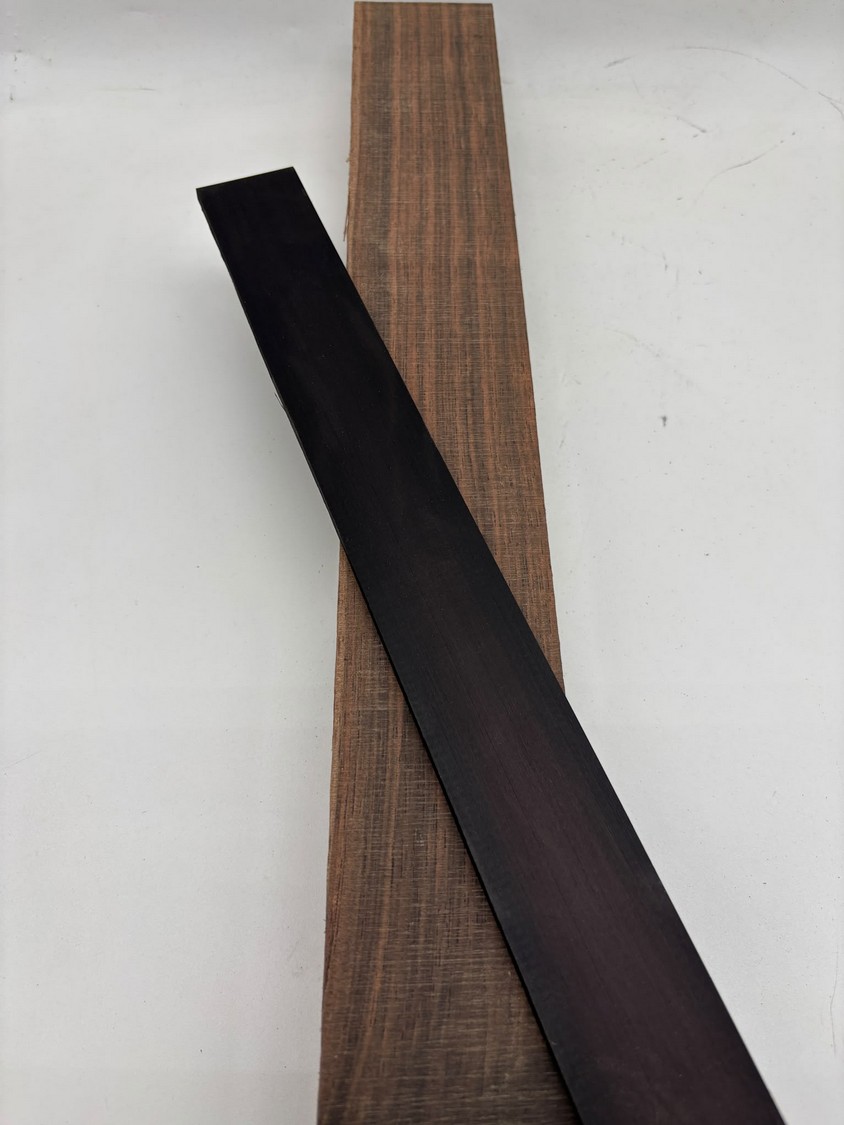
The problem with real ebony
Ebony is dense, very dark, and undeniably beautiful — but it has three practical drawbacks for modellers:
It’s not always evenly black. Natural ebony often has streaks, lighter patches or colour variation running through a single piece, which can be a problem when you need a small, perfectly uniform black part. As you can see in the photos, even a relatively clean piece of ebony shows warm brown grain running through it.
The dust is genuinely hazardous. Ebony is recognised as an irritant wood — its fine dust can cause skin and respiratory irritation, and like most dense tropical hardwoods, repeated exposure increases the risk over time. Anyone milling or sanding it regularly needs proper dust extraction and a mask, which isn’t always practical for a hobbyist working at a small bench.
It’s hard on tools. Ebony’s density and natural silica content dull blades quickly. Cutting and sanding it is noticeably slower and harder on equipment than most other hardwoods.
Why Black Hornbeam works as a substitute
Black Hornbeam has been a known alternative to ebony for a long time among modellers in Eastern Europe, where it’s a traditional choice for black detail work — which is part of why we sourced it from there ourselves.
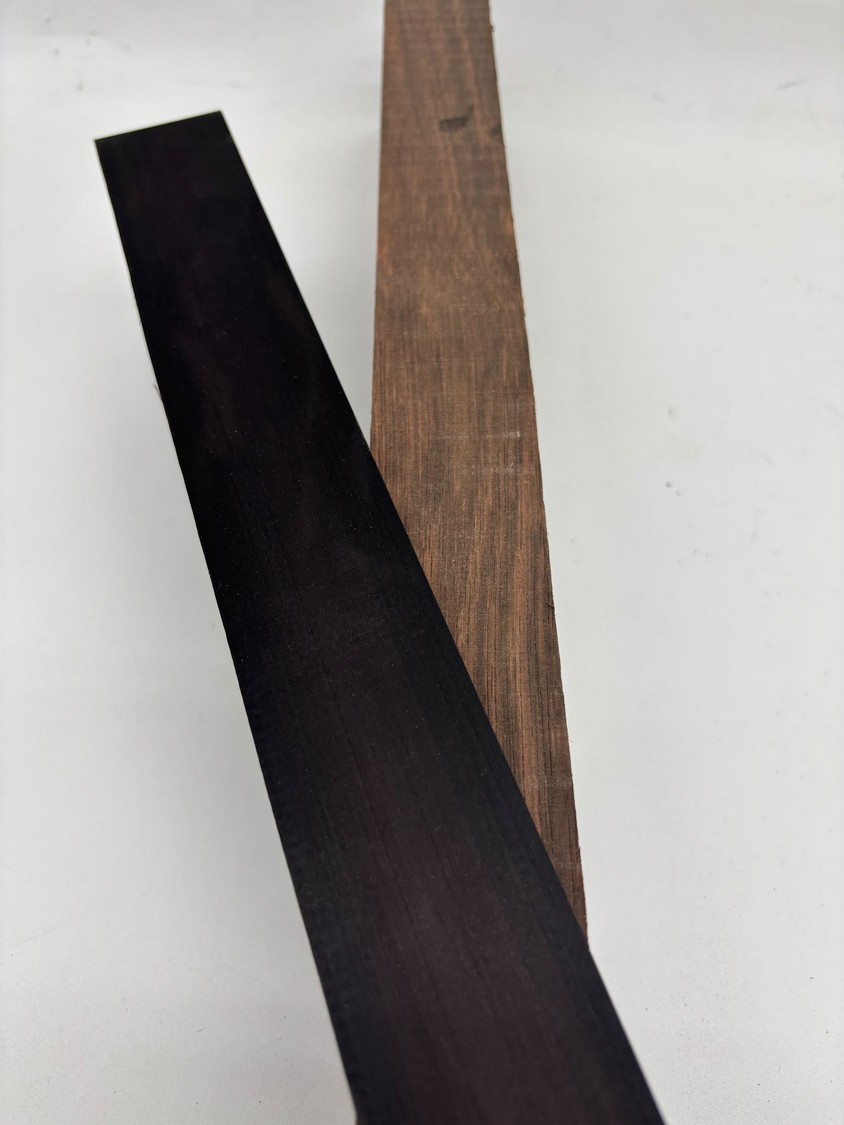
More consistent colour. Black Hornbeam tends to be more evenly dark throughout a piece than natural ebony, with less of the streaking and colour variation that ebony can show. Occasionally a piece may have slightly lighter areas, but these even out significantly once a coat of varnish or wax is applied — so the final result on a finished model is consistently deep and uniform. Builders who’ve worked with both often note that polished Black Hornbeam can look almost uniformly black — smooth enough that it’s sometimes mistaken for a synthetic material.
Easier and safer to work. It cuts and sands noticeably easier than ebony, without dulling blades as quickly. It still produces fine dust like any dense hardwood — standard woodworking precautions (dust extraction, a mask when sanding) apply — but it doesn’t carry the same recognised irritant classification that ebony does.
More affordable. Because it doesn’t carry the sourcing and handling costs that come with tropical ebony, Black Hornbeam is significantly more accessible for hobbyist budgets — without asking you to compromise on the look you’re after.
Where to use it
Black Hornbeam is best suited to parts that would otherwise need to be painted or stained black: wales, masts and spars, trim, fittings and small carved details. It’s not typically used for hull planking or deck planking. Note that due to how it’s sourced, width is limited to a maximum of 40 mm (~1 9/16").
In short
If your build calls for genuine black timber rather than painted or stained wood, Black Hornbeam gives you that result with an easier, safer working process — and at a fraction of the cost of real ebony.